Wrestling is a high intensity sport, requiring levels of endurance and strength most don’t realize. With that comes a high risk of injuries occurring. For wrestlers, coaches, and teams as a whole, a single injury can affect the dynamic of an entire team and performance status. The most common injuries are knee, ankle and shoulder. Recovery time looks different for all wrestlers.
“It all depends on the athlete and it depends on how serious the injury is,” Sean Fowler said. “It’s hard to say how long they will be out for. Most of them bounce back pretty well. One thing to look out for is having athletes coming back too soon, that risks them injuring themselves.”
Playing a key role on the team and needing to take time off to recover from an injury can be detrimental to the team’s performance.
“When someone’s injured, it’s gonna affect the team in a couple ways,” Fowler said. “If you have a number of athletes, it’s a next one-up situation. Someone who was behind them, maybe JV or whatnot, can move into varsity. So, it’s an opportunity for them, but typically speaking, it will hurt the team, potentially with the team score, especially if there is nobody to step into that position.”
Coaches must find a solution that best fits in the moment and allow their team to adapt to the changes. When injuries happen, there are lots of changes that have to happen, changes that also apply to the wrestlers.
“They’re not just teammates, they’re also competing,” Fowler said. “Being practice players is one thing that can be really problematic when one is out. Like if you have a really good practice partner and they get injured, then you have to try to adjust the best you can. Although, it’s a double-edged sword because the benefit of that is you get to see a different style of wrestling and you maybe become better.”
Coaches are affected as well and must not show any disappointment or worry, as they are to be there for the wrestler and the team as a whole. However, they too are affected and can be disappointed.
“I’ve had some injuries over time, and your number one responsibility as a coach is to keep your athletes safe,” Fowler said. “When they get injured, especially when it’s a serious injury, you ask yourself questions, like, is there something I could have done to avoid this or whatnot? So, there’s a certain level of responsibility you take, even when there’s not much you could have done about it.”
To prevent injuries from happening so often, Fowler teaches his athletes special moves and techniques that avoid this problem. Additionally, when someone gets hurt, his words of advice go a long way.
“[I tell the athletes] ‘hey, you’re okay, you’re not letting anyone down. You’ve got to take care of yourself right now,” Fowler said.
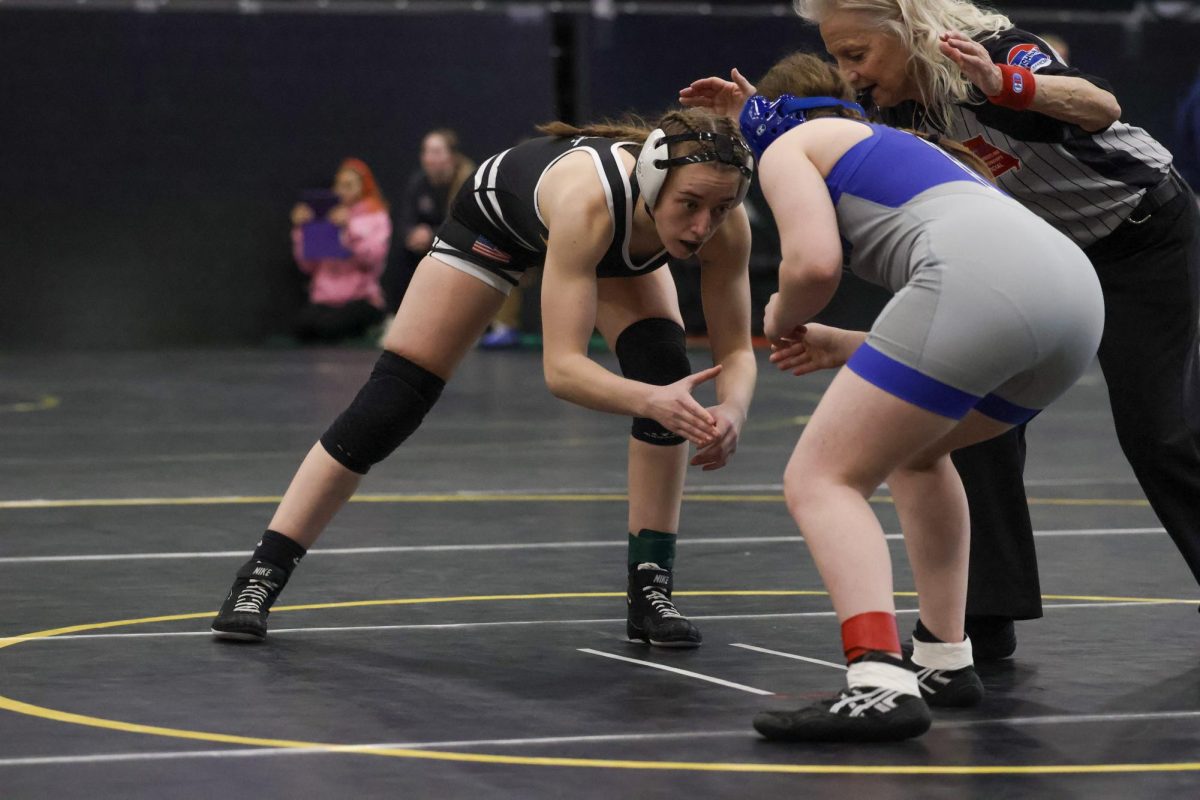
From a wrestler’s standpoint, they often feel defeated. Their goals are being put on hold. Senior Aubrey Peterson, a 3-time state qualifier, injured her ankle last season doing sprints during conditioning. Peterson’s immediate reaction was fear.
“I was terrified that I was not going to be able to practice and make it to state, because that was the goal to place at state last year,” Peterson said.
Luckily for Peterson, the injury was just a sprained ankle, nothing more serious. For her, the recovery process was simple.
“Coach taped my ankle every day, then I did take sporadic time off, like, a week off immediately after it happened,” Peterson said. “My coach was making me do so, and then just not wrestling against people in, like, duels and stuff that wasn’t really necessary.”
Peterson believes her absence did have a negative effect on the team, but she continued to support the team.
“I think it made it hard to place in that tournament and win duels, but overall, I tried to stay in the atmosphere, so I feel like my presence was still there,” Peterson said. “I continued to show up to the duels and the tournaments and set math sides, hear them on, you, and in the room, even if I wasn’t wrestling, I was helping coach them and help them get better.”
With that, Peterson was determined to bounce back and was gunning for the state title.
“My motivation to come back was to qualify for state and place,” Peterson said. “That was really my main goal. I wanted my name on the wall in the room.”
![FHN Wrestling Celebrates Annual Banquet [Photo Gallery]](https://FHNtoday.com/wp-content/uploads/2026/03/9-IMG_0009-1200x800.jpg)