
Starved For Validation: Social Media’s Negative Impact on Eating Disorders


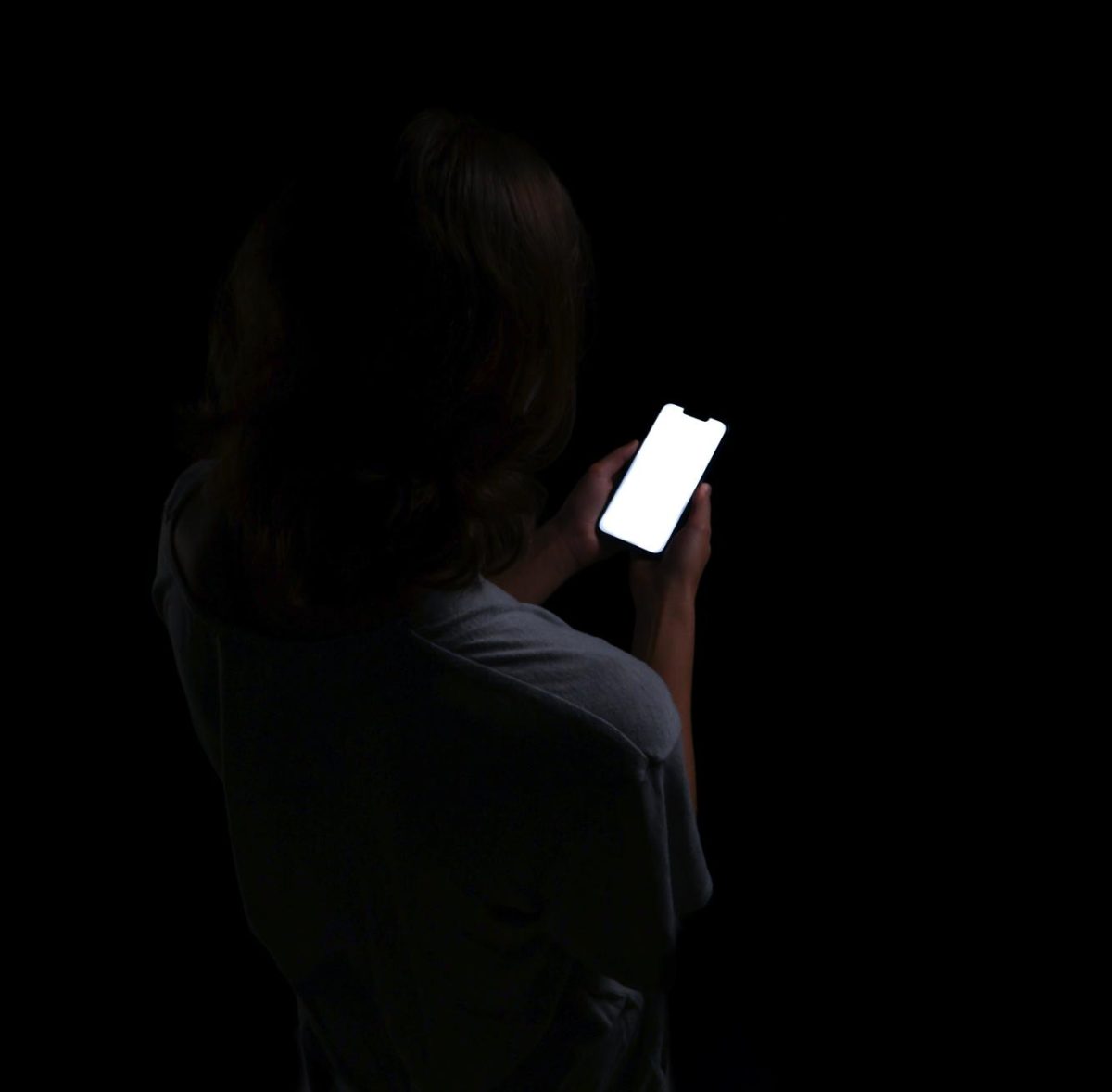
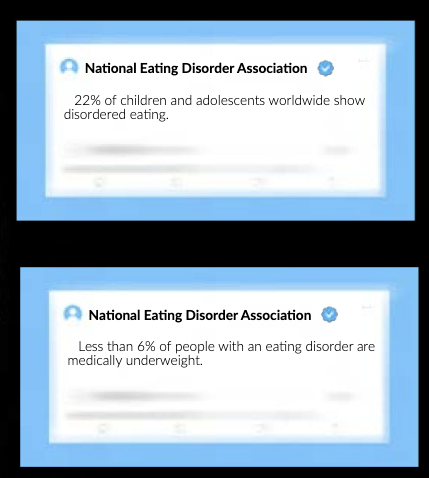
High school is a common start for eating disorders, with constant comparison and the pressure of students’ social and academic life. The problem only grows when social media is added into the mix. With toxic online communities and unrealistic expectations, many teens struggle to take care of their body.
‘“It’s just a deviation from the norm of someone’s intake,’’ licensed professional counselor Jennifer Haynes said. “It’s something you wouldn’t necessarily expect to see on your day to day, from the average.”
Disordered eating and unhealthy social media expectations are nothing out of the ordinary for high schoolers, though the community seems small there is a hidden world that lies below the screen.
Eating disorders can be really hard to identify in public. Some noticeable symptoms of eating disorders might be skipping meals, a high increase in food consumption, excessive restriction, or exercising excessively.
“They have nine truths of eating disorders,” dietitian Laura Brandfield said. “One of them is that you might not be able to outwardly tell if someone has an eating disorder or not. [Eating disorders] really affect all people. You know, girls, boys, all ages, all races, all generations.”
Although there are various causes to disordered eating, the media has always been a strong influence. With an influx of X (known as Twitter), Tumblr, or other widespread social media platform members within the last decade resorting to communities online. Communities in support of benefitting each other openly encourage unhealthy habits, creating an environment that is either in constant competition or 24/7 fear mongering. Having these online communities makes it much easier for those to hide their illness, especially when those media platforms are there to enable the toxic routine. However, there are signs.
“A lot of it just comes from noticing things that are going a little bit differently than they have been before,’’ Haynes said.
Most people who struggle with eating disorders keep quiet and may not reach out for help because it might be the only reason they are getting attention at home or they think it’s better to be a part of something more negative than positive. Though the battle is not an easy ride, counselors and dieticians agree that recovery is always possible.
“You know, life happens,” Haynes said. “And you have responses, and sometimes responses spiral out of control, and then there are folks who are going to get you back on track.”

A four-year-old with hair like silk spins and leaps in laps, rehearsing with the other young ballerinas. Tiny ballet flats hit the floor, and top-notch buns bounce up and down.
A young Kyra Landers finds herself among the youthful giggles that fill the room as if there were a surround sound system built into the walls.
Suddenly, all the ballet flats stop in place, then shuffle nervously.
It’s time to announce the roles for her childhood annual dance recital.
While the other dancers are all wondering who will be getting which spot in the show, Kyra’s focused on something else.
“Mom?” She questions. “Why are my thighs bigger than everyone else’s? Why do they look like that, and I look like this?”
Her dance journey was just the prequel.
“I remember my teacher made me the rat, and when I asked her if I could be an angel, she told me no, because angels must be skinny,” Kyra said.
Small comparisons and comments left by peers quickly spun into what felt like an everlasting illness. Kyra quickly became consumed, and by her next stage in life, her illness began to define her.
“When I got to middle school, that’s when it got really bad,” Kyra said. “I was on social media, comparing myself to other students and a lot of online influencers. I just wasn’t built like them, and all my friends were skinnier than I was. It didn’t feel good.”
Only then did social media come into play. Like many teenagers, especially during the lockdown, Kyra turned to online communities to fill the void left by the empty outside world. However, when Kyra joined these platforms, she quickly realized they were not what they seemed to be.
“There are these accounts on Twitter and they’re literally just dying,” Kyra said. “They are posting [images of their bodies or habits], and they can’t even move, and it’s idolized. They’re dying, their body is failing, I’ve had friends online, and I’ve just had to sit there and watch them die.”
Social media is one of the biggest antagonists when it comes to the culture of eating disorders.
“A lot of the time, especially some of the younger generations under the age of 20 that are coming in counseling services are bullied on social media,” Jennifer Haynes, counselor and eating disorder specialist said. “Things that people feel like- you just can’t avoid that.”
Some people online find comfort in knowing they are not alone, though the publicity puts them at a much higher risk of being exposed.
“I think they know it’s wrong, but these groups give people a sacred space,” Kyra said. “They couldn’t post or show this stuff publicly, but online people will support you, even if it’s messed up.”
Large platforms like X have accounts that are often run by bots or variants of technology, meaning the algorithm is always working and will continue recommending videos that users interact with.
“Your media learns a lot of what you look at,” Haynes said. “If you pause or wait on something, it will keep coming your way; it catches so many things people don’t even realize. We encourage anyone who comes into the program to just delete and restart all of it.”
Though Kyra has now gone through many attempts at recovery, when an illness is so severe, the setbacks feel impossible. Whether it be her journey with her sports and weight cutting or her online presence, it had felt like no escape was possible.
“She became obsessed with it,” said Ashley Landers, Kyra’s mother. “It started with her coming home and just saying, ‘Well, I can’t eat that’. It got to the point where she was completely not eating and making up excuses. She’d tell me that she ate too much lunch, so she just wasn’t hungry. But I’d checked her lunch account, and it hadn’t moved at all.”
Watching your child go through something so severe
is never easy. The sad truth is that eating disorders are so common, though it also means that you are never alone.
“I wasn’t offended by the lies because I went through the same thing as a child,” said Ashley. “I wasn’t upset with her. I was just upset because it broke my heart to see her struggling with it. I just had to remind her she can talk to me, and come to me with anything.”
Though Kyra might still struggle today, she has learned the importance of recovery and perseverance. She wasn’t going to be another “Twitter case.”
“You get in that mindset where you are just trained to starve,” Kyra said. “I think what helped me most was just realizing you’re never going to reach your ambitions and goals once you get too far into your disorder, you have to pull yourself out of it, your brain needs food, and it needs fuel. You cannot be successful in school if you’re not eating- you’re so much more than your goal weight.”
Filters, editing, and distortion are in pictures and videos everywhere. From Instagram posts to magazines, edited images are widespread throughout the media, and only gaining in popularity.
Studies such as the Dove Self-Esteem Project and The National Library of Medicine depict increasing rates of young girls using apps to enhance or adjust photos. As difficulty increases to discern what is real or fake online, the beauty standards become less and less achievable. This can potentially be very harmful to a generation of young, impressionable youth.
“The youth is a targeted group; that’s anything from television icons or shorts that you see or reels that may pop up on Instagram,” Assistant Principal Monica Perry said. “All of that is intentional. With all of the apps that allow people to filter their appearance, hair, eyes, hips, legs, nose, cheeks, chin; that is very damaging to females as well as males, because that fake image is what they are growing up seeing, so that is what they expect.”
The ease of changing one’s appearance in photos and videos has increased greatly in the last decade. Countless filter apps are easily utilized to quickly add effects to a picture, from a smaller waist to blurring of skin. Because of the popularity and frequency of these altered images and videos online, insecurity spreads. Comparison is a harmful factor
in this. Comparison has become more common with the growth of social media meaning people are exposed to more things to compare to, possibly resulting in numerous negative effects.
“Social media is potentially detrimental for mental health in general, but especially things like anxiety, depression and eating disorders,” psychology teacher Sean Fowler said.
Edited posts easily go undetected and pass as ‘all natural’, as they are intended to.
“When young women get online and they see people that are Photoshopped, even if they know it’s not real, it doesn’t matter. It feels real. Even when we know something is fake, we didn’t evolve for this media landscape, so it feels real even when we know it’s fake.”
The introduction of AI generated or retouched models has widened this aspect. In the August 2025 issue of Vogue Magazine, a Guess ad featured two AI-generated models, wearing their summer collection. The advertisement sparked criticism from viewers. Opposers took to social media, saying that it was harmful to body image and also to the occupations of models.
“AI has definitely been brought into multiple social media platforms nowadays,” senior Deena Ermias said. “I feel like it could hurt multiple people’s personal lives, their jobs, and education as well. It’s something that should only stay in computer software and engineering and not brought into social media.”
Apps like Facetune can manipulate photos, creating a “perfected” look that is ultimately fake but often goes undetected. This can create unrealistic standards for people when posting online, leaving disatrous side effects and harming the self-esteem of those who compare themselves to edited photos.
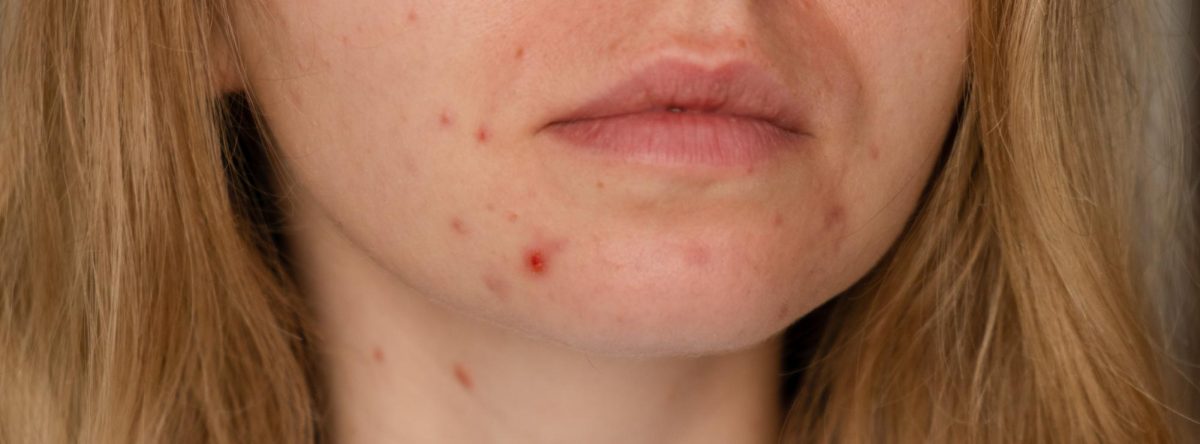
Since the dawn of the internet, the harrowing question of whether or not social media is doing the world more harm than good has lingered in the air.
Social platforms such as TikTok, Snapchat and Instagram certainly have their upsides, like facilitating communication and widespread news. However, the unlimited correspondence and the mask that social profiles provide has led to the emergence of harmful subunits within these platforms.
“Eating disorder Twitter is a side of the X algorithm where mainly young individuals are together, encouraging each other to basically immerse themselves in diet culture, but unhealthily,” Summer Merworth, a former victim of toxic online spaces, said. “You know, things such as fasting, starving, low calorie recipes, sharing unrealistic goals and unhealthy expectations. They kind of recruit each other. They’re all very twisted, and some of them can be cruel, and they lie a lot, and they’ll encourage you to get worse and worse until you’re dead.”
These communities target teens and drive many young adults into mental volatility and instill a deep sense of insecurity in them. A prime example of one of these communities is the eating disorder society of X– formerly known as Twitter– EDtwt. EDtwt is like its own civilization. The community has its own rules, leaders and even its own language.
“There definitely is their own terminology,” former member of X’s eating disorder community, Klohie George said. “It’s to kind of bypass the rules of social media. So, instead of typing out like the word calorie, it would just be shortened down to like ‘cals’. Or, like, if you’re talking about weights, you would have ‘GW’ which stands for goal weight, or ‘CW’ which stands for current weight.”
The majority of people who become victims of these toxic spaces are young girls. Some intentionally seek out these harmful spaces, but some are simply trying to be healthy, and the algorithm sends them down a path of unmeasurable destruction.
“There are a lot of pro eating disorder websites,” licensed professional counselor Jennifer Haynes said. “There are a lot of pro eating disorder threads. On every single one, they’re just all clones of one another. You can go down really scary rabbit holes and there are people who will cheer you on to do the most unhealthy things.”
The kinds of content posted on EDtwt varies. Sometimes, people are degrading themselves– posting their own bodies on a public platform and asking their followers to insult them for “motivation.” Sometimes, these young teens and adults post “fatspo”– photos of overweight people they pass around accompanied by disturbing subheads, calling people “fatties” and “cows.” The idea that skinny is better is constantly perpetuated.
“[The community] 100% makes you worse,” George said. “It’s like a competition. Everyone’s competing with each other to be the ‘best’, which would mean getting worse. The people who are in [the community] for a long time, when they get super skinny, at first they’re like, ‘Wow, I made it.’ But after a few months, they’re like, ‘I hate my life. I wish this never happened to me.’ Like, ‘I want to get better, I just can’t.’”
People flock to social media platforms like X to form these types of toxic communities. This is mainly due to the loose rules and regulations. According to George, the amount of harmful posts that seem to ‘slip through the cracks’ of network guidelines is becoming increasingly alarming.
“The amount of [harmful posts] that I’ve seen pushed out and even my own posts in the past being pushed out, the guidelines are just blind,” George said, “If it’s trending, the algorithm is gonna push it. They don’t care about who can see it or age limitations or anything.”
Even when people’s accounts get banned or suspended, there is nothing stopping them from restoring their platform.
“People are not going to leave these spaces until they’re ready because it gives them a sense of community,” George said. “You don’t feel as alone, so even though you might get reported 10 times– just make fake emails, fake accounts and come back.”
The most difficult part of being involved in a toxic space like EDtwt for an extended period of time is leaving. When a community and support system are intertwined with the very thing causing harm, recovery can seem impossible.
“Not everybody who’s sick for any reason is ready to recover,” Haynes said. “Maybe they’re gaining something from being sick. Maybe that’s how they have a chaotic home life, and maybe that’s how they’re getting attention. Any kind of recovery from anything doesn’t happen in a vacuum. You can’t do it alone. People evolve to live in tribes. That’s why we live in subdivisions. You can’t do things alone, and you certainly can’t go into any kind of recovery from anything alone. I don’t care if it’s your favorite door dash driver, someone can be your support system. We’ll figure it out.”
Obsession is easily developed: liking a post for a creator going after the ‘supermodel’ look, following an account promoting 1,200 calories per day, trying out weight loss ‘tips.’ Compulsion takes the wheel; escape feels impossible.
“When [the eating disorder community online] was
something I was into, I felt trapped by the internet, because it was all I was seeing,” Summer Merworth, an 18-year-old content creator from New Jersey diagnosed with anorexia, said. “It was all I was searching.”
Entering this side of Twitter, people don’t just see unhealthy behaviors and mindsets, but are encouraged to embrace them, encouraged to mimic those seen on the screen.
“I would always idolize these other girls on Twitter,” Merworth said. “I would dress like them, post like them, do my hair like them. Try to achieve their figure. All of it.”
Perception of oneself is now skewed, and without the ability to feel good about themselves, they look to other people for their sense of self-worth, posting the very things that pushed them into this destructive cycle.
“Honestly, the only way I’d cope whenever I felt bad about myself is purposely looking for praise on the internet,” Merworth said. “Posting myself and then waiting for the compliments to roll in.”
Change is hard-earned: unfollow accounts that still encourage unhealthy behavior, delete the calorie tracker and make it a priority to eat three meals a day. Merworth is now fully recovered and has made the choice to be the change she needed to see.
“I wanted to be an inspiration,” Merworth said. “So, I publicly allowed everyone to see me gain weight and tell them about my struggles. I wanted everyone to see that it’s good and okay.”
“If I follow these rules, then I’m valid,” Klohie George, an 18-year-old diagnosed with anorexia, would repeat. In 2022, George joined the X community: one of the largest platforms for normalized anorexic behaviors and weight loss culture. George latched on to this, consuming media that validated others for their unhealthy practices, and was encouraged to follow in their footsteps.
“The kind of posts that drew me towards this community were the tips, tricks, and guides,” Klohie George, a former member of toxic online communities from Utah, said. “I’m a bit of a perfectionist, so having a sense of rules that I could follow made everything seem real.”
According to George, these ‘recommendations’ remain dangerous, setting a baseline that is unattainable for anybody to maintain safely.
“They were stupid rules,” George said. “If the average amount of calories eaten by an anorexic was 500, then it’s like, ‘okay, I can’t go over that, because that’s the average.’”
Due to the harmful information being spread, individuals trapped in this toxic cycle become disagreeable, which causes tension to pile up in already toxic spaces.
“Everybody is starved and passive-aggressive [in online spaces],” George said. “So, there’s a lot of backhanded comments.”
For George, recovery was only possible when she accepted that even once she started to change, she would still be valid.
“You spend so much time trying to reach a certain point, so it feels like it’s all been wasted,” George said. “You want to hold on to it, because why did I do this for so long, just for the outcome to be me going back to normal?”
Fighting an eating disorder is a constant battle. Restricting food intake can negatively impact your brain and how it functions. After a certain duration of adopting unhealthy eating habits, people who struggle with eating disorders can become extremely self-conscious. This insecurity is only intensified by the unrealistic expectations shown on social media.
“A lot of external factors can influence the way that we eat, or what we eat, or how much we eat,” dietitian Laura Bradfield said. “External factors sometimes can be really distracting from our internal cues of listening to our own body.”
The external factor that is heavily influencing everyone right now is the media, specifically social media. While trends like ‘ballerina legs,’ clean eating, and stair-master workouts are constantly being shown on For You pages, young adults are experiencing body dysmorphia and body perception difficulties more frequently.
“When we talk about body image, it is our perception, and that we know that perceptions are not always accurate for a lot of people, but those with eating disorders, they do tend to be even more distorted,” Bradfield said. “They’re really not accurate what we see maybe in the mirror, or how we feel about our body, really typically are not accurate for those people with eating disorders.”
The media and algorithms are partly to blame for the promotion of unhealthy eating habits and diet trends. Once a person likes an image or views a video about health and nutrition, the algorithm feeds them more content about food. Not all of this information is accurate, but it can look very convincing. Before long, the algorithm feeds someone so much information about so many different nutrition categories that they can forget what a healthy relationship with food really looks like. Health influencers and photo editing add to the misinformation found on For You pages.
“If you look up something, it feeds you a little something and then feeds you more and more of that, and then it goes more and more extreme,” psychology teacher Sean Fowler said.
Constantly thinking about eating causes a mental block. These blocks may lead to increased distraction, confusion or the development of mental health problems. Dietitians and therapists work together to ease the psychological and biological factors that create an eating disorder.
“I like to ask…people or individuals why they might gravitate towards that social media,” Bradfield said, “or what is that message saying to them?” How is that affecting them, or their long term health, and overall goals?”

Eating disorders are mental illnesses that are defined by abnormal eating behaviors, such as eating too much or too little. Although this disorder can be rooted in the mind, it most negatively impacts the body.
The most essential way to stay alive is by fueling with food.
The first couple of days without enough food, the body relies on glycogen in the liver and muscles for energy. After an entire week without enough food, the body breaks down fat for energy, resulting in significant weight loss.
Many teens with eating disorders attempt to burn fat by prolonged fasting. Going without food can be extremely dangerous if not medically overseen. Once the two week mark without enough food hits, the body starts to feed on muscle, leading to organ failure and eventually death. Eating disorders are very harmful to the body, especially to someone who is still growing and learning, such as adolescents. Unfortunately, teenagers and young adults are the group of people who are at the highest risk of adopting such disorders.
“It was really hard to focus in school when I was starving,” said senior Kyra Landers, who has struggled with an eating disorder in the past. “Especially as a high school student when your grades are setting you up for your future, your physical health and being fed and safe is so important.”
Not fueling the body properly slows growth, decreases blood pressure, causes anxiety, tiredness and dizziness. Under-fueling also causes a person’s stomach to upset, resulting in constipation and bloating. It also does significant damage to bone health, creating an increase of injury, especially if that person is exercising or doing sports. Additionally, it can be extremely detrimental to dental hygiene. The bones that make up teeth can decay if they are not being given the correct nutrients. Beyond that, those who suffer from bulimia and adjacent disorders are subject to frequent regurgitation. Vomiting exposes teeth and gums to stomach acid, which results in the erosion of the bones and enamel which make up teeth. The longer someone has an eating disorder, the more severe these effects will become, and the more brittle their immune system will be.
“It physically impacted my body by bruising really easily and getting tired easily,” Landers, who used to be on FHN’s wrestling team, said.
Although eating disorders do a large amount of harm to the body, there are ways to recover, such as going to treatment centers or going to a dietitian. Different things work for different people, but there are solutions for even the worst of cases. For the majority of people who have struggled with an eating disorder, recovery can take years. Reaching out for help as soon as possible will lead to a faster recovery.
“With proper treatment and proper nutrition, things can be reversed,” dietitian Laura Bradfield said. “However, there can be some long lasting consequences depending on severity. How quickly they get diagnosed or treated can predict recovery factors.”
The bigger social media gets and the more often people are online, the more there is a growing community of self-proclaimed doctors that provide medical information over sites like TikTok and Instagram.
For some, it may be nice to have such easily accessible health information, but that doesn’t necessarily mean people are getting reliable, scientific information. Anyone can put on a white lab coat and stethoscope, claim they’re a doctor and spread misinformation, which opens up the possibility of doing more harm than good.
“I think there is definitely what’s kind of called ‘pop-psychology’”, said Taylor Viehman, a child, youth and family therapist. “And I think with social media, we’re just so naturally drawn to comparing ourselves to other people as humans.”
Misinformation can happen greatly when involving healthy eating habits. TikTok “dietitians” will come online and say the “top 10 secrets of losing weight”, and maybe even try to sell a “miracle product.” And while these methods could potentially help someone lose weight, there is no guarantee that it is healthy or safe to do.
According to the Mental Health Foundation, for young women especially, weight and body image is constantly playing in the back of their minds. Society pushes their unhealthy standards of being a certain height, a certain weight, a certain body type, onto any young mind they can. If they don’t fit up to those standards, it can have a damaging effect on their mental wellbeing. This can cause teen girls to want to do anything to lose weight, going so far as to even take advice from people online.
But there are better alternatives.
According to Viehman, talking to licensed dietitians, doctors and those in the nutrition field will always be leagues better than trusting a stranger on the internet. Everyone is different and has different needs, meaning what works for some may not work for others. But if that isn’t easily
accessible or offered to some, there are hot-lines and trustworthy, reliable online resources that can provide factual and structured information, coming straight from professionals. Taking advice from people on the internet that lack a professional background will never end well, and will likely cause more damage in the long run. Viehman suggests reaching out to the National Eating Disorder Association, or a school counselor.
“I think that everyone is just doing their best,” Viehman said. “No one ever has the right to make any comment on anyone’s body. Every body is different.”
Your donation will support the student journalists of Francis Howell North High School. Your contribution will allow us to purchase equipment and cover our annual website hosting costs.