A Look Into District Leaders: The Importance of Teens Taking on Leadership Roles


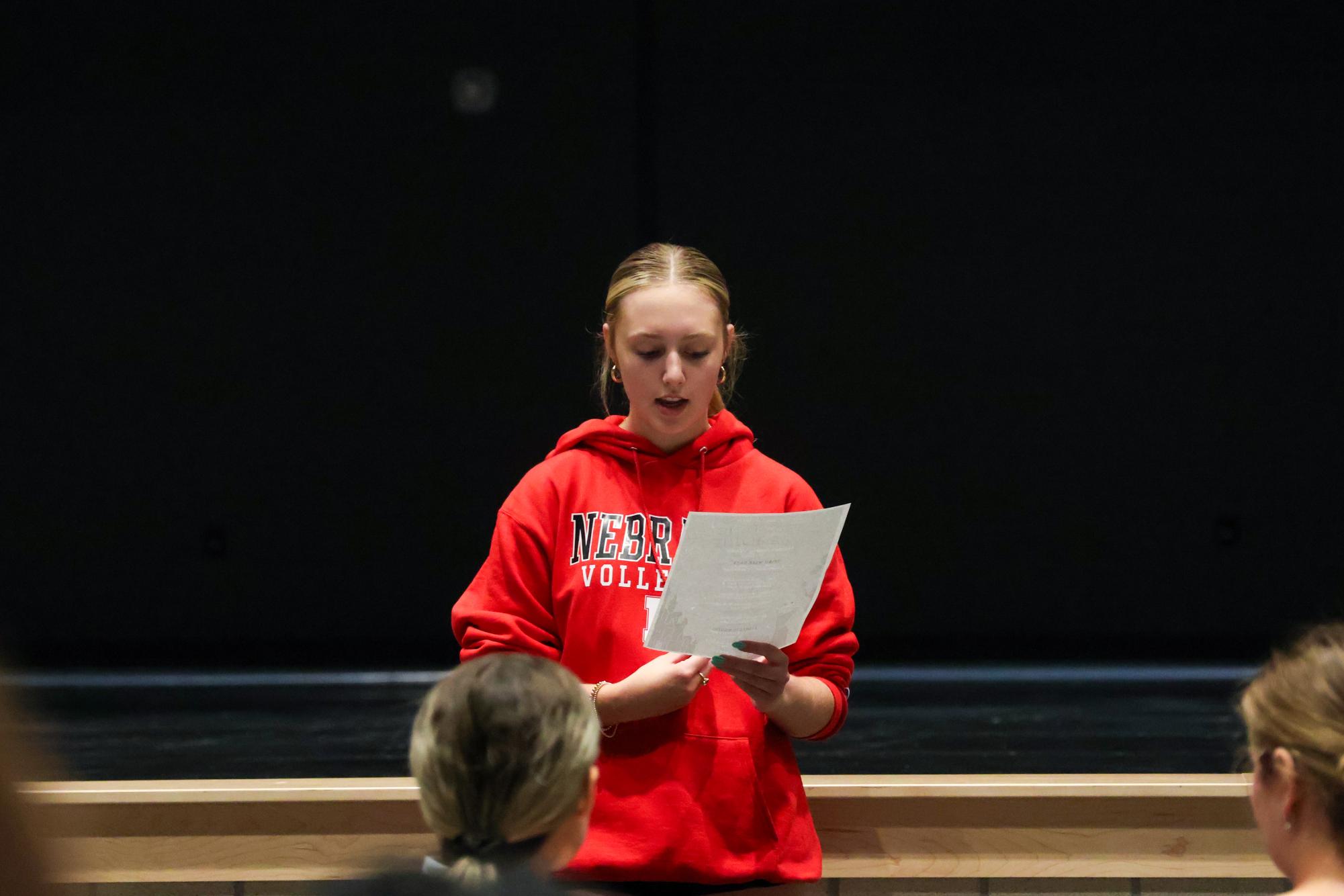
Leadership manifests itself in several different ways, and by allowing students to embody leadership roles, Francis Howell North’s various clubs offer students the opportunity to discover another facet of themselves.
“I think leadership is stepping up into a role, even if you’re not ready,” Kimora Jordan, the senior in charge of MAC Scholars’ cultural committee, said.
After the club’s sponsor departed last year, the future of MAC Scholars was in question. With the structure and leadership of the club dismantled, the task of determining who would assume responsibility was left up to the club’s members.
“There was a group of us that wanted to step up,” Jordan said. “We wanted to make sure that we kept the club going, so our voices were heard, and so that the legacy of MAC scholars would continue.”

As a committee chair, Jordan’s duty is to coordinate the activities and events that the club hosts. She explained that her personal goal as a leader of MAC Scholars is to act as a role model and support system for the younger students in the club.
“When you have a teacher, or a sponsor, you know that this is their job. But when it’s a student who’s the one leading, there’s this recognition that they’re volunteering their own time. Younger students can see that we want to be there, and that we really care.”
Jordan believes that being able to see upperclassmen in leadership roles is incredibly important for younger students.
“As a senior, the freshmen see me as a role model: someone they can model their goals on. They can get guidance, and have a model of what to aspire to when they get to 12th grade,” Jordan said.
Various other clubs at Francis Howell North seem to agree about the value of having students in leadership roles, providing students with the opportunity to take up responsibility and organize club activities. Notably, the Asian American Association is entirely student-led.
“Collaboration is a necessary part of a leadership position,” senior Tiffany Lee, secretary of the Asian American Association, said. “Our goal as a club is to celebrate the school’s cultural diversity, and the cabinet is entirely responsible for planning events. So, we need to be able to clearly communicate our opinions and take others into consideration when we plan. But mostly, our club is successful because we take the initiative and go the extra mile.”
Junior Melanie Juarez has seemingly embodied these qualities, recently taking the initiative to revive the French Club.
“The club existed at North previously, but eventually the support behind it waned,” Valerie Luvai, French teacher and sponsor of the fledgling club, said. “When Melanie initially approached me with the idea of starting the French Club back up, I thought this was a really good idea, because when a student takes a genuine interest in something, it inspires that interest in others.”
As the student body of North has demonstrated, all it takes is one proactive person to have a positive influence in the community. Those in leadership positions have rippling effects upon the student body, serving as both guidance and inspiration.
“You are your own advocate,” Jordan said. “Being able to connect to the younger individuals through a leadership role is incredibly important. So if you want something, you have to go for it, and if you want a role or a position, you need your voice to be heard and also put in the work behind it.”
Students at FHN love being in leadership positions for all sorts of reasons including being in charge, and helping others improve. Below is a list of club sponsors for each club mentioned, that you can contact in order to join a club today, and be one step closer to becoming a leader who will improve their community.
Once in Student Council, students can contact Ms. Pugh or Mrs. Gallagher for a form, and fill out an application to be a cabinet member in the upcoming school year. Student Council members and cabinet members can also run to be an officer, where surveys will go out for the school to vote on their leaders.
Contact Ms. Pugh and Mrs. Gallagher to join Student Council.
In Mac Scholars, several opportunities for leadership run around. Though committee leaders are often chosen through show of interest, other opportunities such as mentoring arise. Right now, upperclassmen Mac Scholars members are being offered opportunities to mentor underclassmen members of the club, and guide them through tips for things all over, from challenging classes to high school overall.
Tara Willen is located in the Learning Commons for information on Mac Scholars.
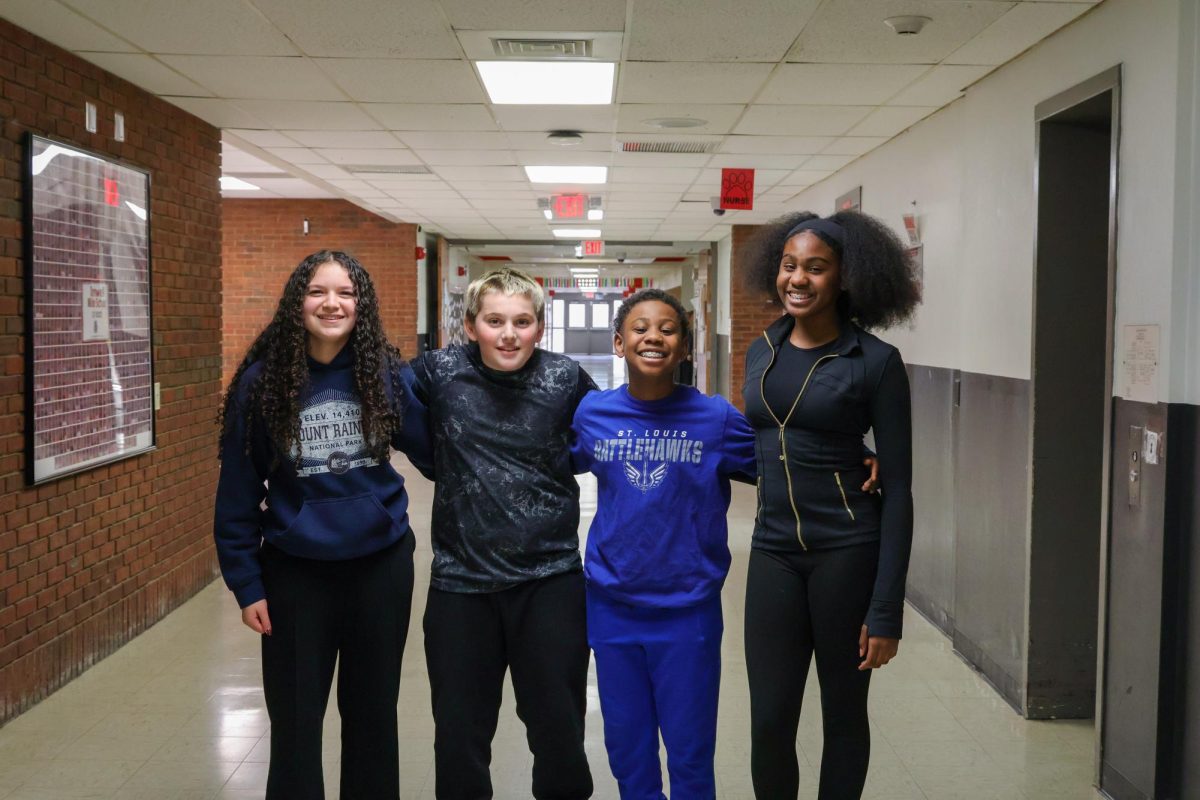
There’s leadership in every aspect of life. Bosses at work, teachers at school, even older siblings one may have, and it all boils down into community. Community is something that spreads experiences and helps people grow into better versions of themselves. It’s something that understandably everyone needs or wants. Though to have a good community, there needs to be a good and set leadership role being held. What it takes to be a leader can be as easy as just putting yourself out there and talking to others, but what it takes to be a good leader can make such a large impact on the people in a community.
“[A good leader is] somebody that’s kind and helpful, and likes to help the community,” Marieangel Narvaez Torrees, an eighth grade WEB mentor at Barnwell said.
A big community that almost everyone experiences in their lifetime is school. School can be a very stressful and overwhelming place for a lot of people, which is why it’s important that there are leaders who are willing to help students. In Barnwell’s case, this is the Where Everyone Belongs (WEB) program. In this program, older students in the building help the new sixth graders with their questions and needs. This is especially good for students who are moving into a new school, whether they’ve just moved towns during the middle of the school year, or they’re simply going from elementary school to middle school. For sixth grader Oscar Hart, some extra support was very appreciated.
“I felt lost, but then the WEB mentors helped me a lot,” Hart said.
These student mentors do more than just support other students, though. They also support and put together big school events that bring students together.
“A couple months ago, we had an assembly, and the WEB leaders hosted it,” sixth grader Aiden Hardrick said. “They did a good job talking about being drug free, and making good decisions about what you should be doing, and it was super nice.”
These student leaders give a sense of connection to those in need as they differentiate from a usual student guide like a teacher or counselor. Many student guides are a lot higher in power than students and it can be hard to feel seen by these adults, so with these younger mentors set in place, it helps build a form of relatability and can feel a lot easier to ask for help when needed. There are so many different groups of students who are in the position of being these mentors, so finding someone who has similarities or even meeting someone completely different is very possible.
“It’s a lot of different characteristics,” Shannon Orzel, Barnwell counselor and co-sponsor of WEB, said. “We don’t just choose students that have high grades, we choose students that are kind and supportive and able to lead independently, and students from all different walks of life. I think that’s the most fun part is that it’s not just one type of student. We want to get them from all different types of student groups so that everyone is represented, and everyone feels like they can find someone within WEB to relate to, and if they needed something, they would feel safe going too.”
Not only do these leadership roles have an effect on the people being helped and or mentored, but they also have a huge impact on the leaders themselves. Being a specific leader to a group big or small puts a new responsibility on a person. Though with the potential stress of such a responsibility also comes a feeling of fulfillment, as well as lots of connections with new people in ways one might not have been able to get before taking up such a role.
“[To be in a leadership position], it means a lot to me,” Abbi Hardrick, eighth grade WEB mentor said. “It gives me another way to connect with the younger kids in the school, since it is my last year, and I just really like to help.”

For some, it can be difficult to envision life after high school, or easy to worry that they are unprepared for their future. One way students are overcoming the uncertainty that comes with graduation is setting themselves up with the experiences and tools they need early on. Many students that partook in leadership roles in high school or earlier education believe that it prepared them for their post-high school journey.
“Leadership positions definitely helped me get into the honors program and get my scholarship,” Maddy Hecht, alumna and past Student Council President said. “I have a full tuition scholarship, which is part of the honors program, because [my experiences] gave me something to write about, and those experiences kind of acted as lessons.”
While Hecht utilised her experiences to get into higher education, alumna and past Drama Club President, Piper Orzel uses the skills she learned in high school on a daily basis at work.
“I have a couple jobs,” Orzel said. “I’m a pharmacy technician at Walgreens right now, and people are crazy, so you just have to make stuff up as you go, and you have to take lead on some stuff. And I also help build sets and do box office stuff at SCC. So theater has definitely played a huge part in what I do and what I’m majoring in.”
Everybody’s path to becoming a leader is unique. Previous Class President Grant Kilen’s path started before his freshman year of high school.
“I went to Francis Howell North for first hour when I was in eighth grade for math, so I was able to attend FCA in the morning,” Kilen said. “And I guess they kind of noticed I was pretty attentive. I was pretty well read on it, and they asked me to be a huddle leader after my freshman year, and that was a really great experience. I learned a lot more myself, but also I got to help other people learn more.”
In order for these leadership experiences to have an impact, those that hold them must learn from them. For Kilen, the multiple positions he held shaped his relationship with leadership and work.
“I do think it’s super important [for teens to be in leadership positions], because you learn how to communicate, you learn a lot of personal skills, learn how to better manage your time, learn how to plan your life out,” Kilen said. “But also, there’s a lot of ways that it contributes to how you can serve the world better, because that’s really what it is at the end of the day, is serving other people. That’s why I was in Student Council. That’s why I did FCA. That’s why I’m in student government down in Martin.”
Whether one’s journey in leadership involves student government, student council or drama club, one common factor is the growth experienced through that involvement. When teens are given the opportunity to take on these roles, they gain the skills to excel wherever life takes them after high school.
“I definitely think that it’s important for people to be able to have the option to become a leader,” Hecht said. “There’s so many valuable things you can learn from leading others. But you also just learn from other people when you’re in that kind of setting.”
Your donation will support the student journalists of Francis Howell North High School. Your contribution will allow us to purchase equipment and cover our annual website hosting costs.