The Rise of Brainrot Starting From the Youth


As technology advances, so do the things being posted in the media. Specifically through brainrot. Brainrot is something one cannot escape nowadays. Almost every kid knows about it, whether it’s a character, a song, or even just an everyday phrase. People hear about brainrot all over, scrolling on social media, watching youtube, or even family gatherings with younger kids present.
“[I guess my son found out about brainrot] just from all the kids, or maybe youtube was kind of the thing that put him on to it, or just his friends at school,” Essence Healthcare copywriter, Samatha Montes De Oca said.
With these things randomly gaining popularity, it leads to the questioning of where it all originated from. It all spans back to the early days of 2023, when new terms and characters came out, such as “Skibidi Toilet,” “Rizz,” and “Gyatt.” These terms could be heard everywhere whether online or in person. Using them as everyday words even though they held no substance.
“I think it can sometimes be entertainment, and sometimes it can be straight brain-rot and harmful,” sophomore Miguel Silva said. “Especially in children who see some of the content that is meant for older people, like thirteen to fifteen, but some people take [brainrot] and direct it towards little kids who take it and they genuinely start getting their brains rotted.”
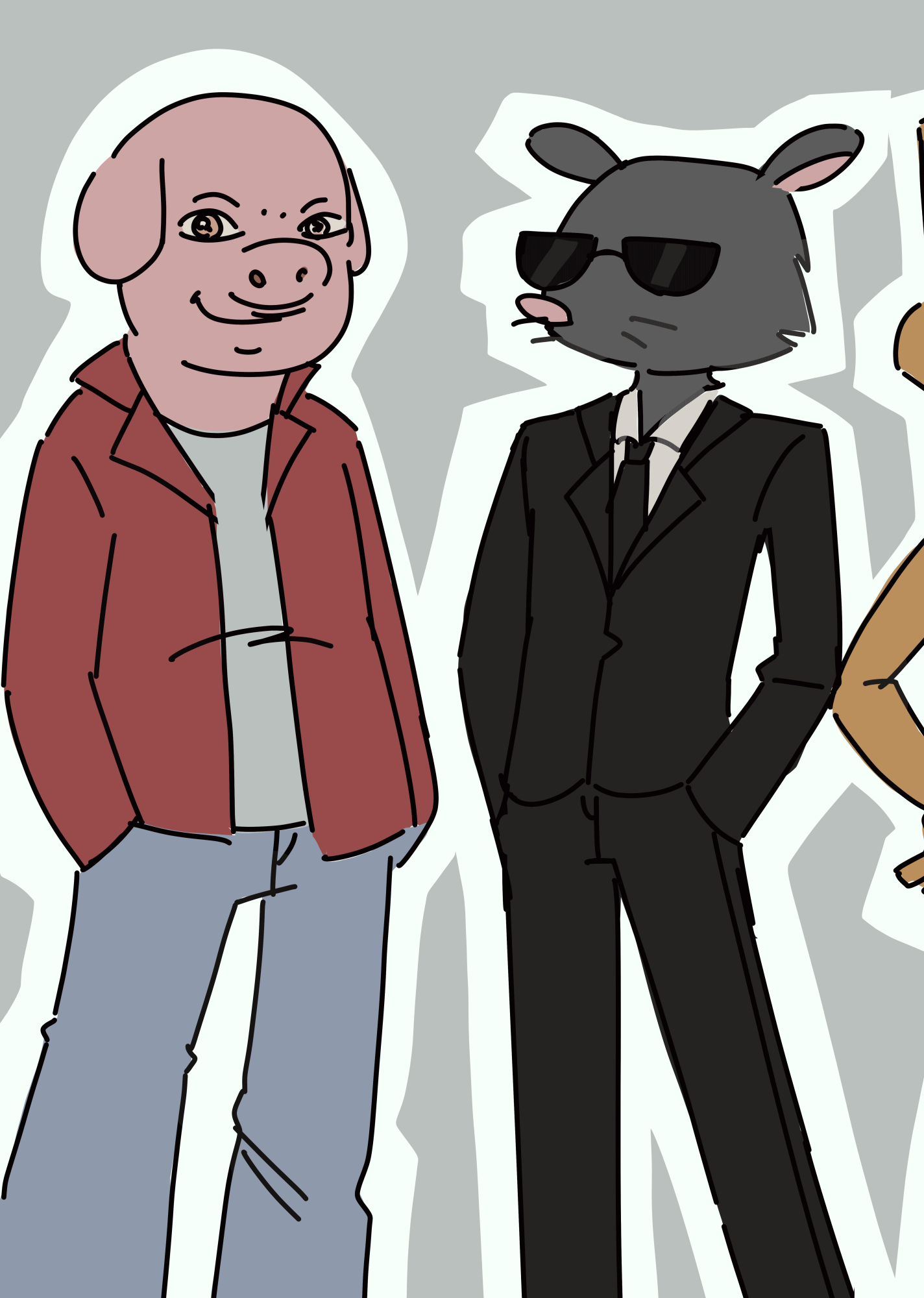
Though terms weren’t the only things circulating the internet. Around the same time there was a wide span of characters as well. A big one was John Pork and the dynamic duo with Tim Cheese. It started off as a simple video, there would be a ringtone sound along with the character John Pork on screen, with a call layout with the choice to answer or decline. Shared with a phrase of “John Pork is calling.” Then over time it progressed to have more of a storyline to go along with it, which is where Tim Cheese is brought in, and eventually gains just as much popularity as John Pork.
“I would have to say John Pork [is the earliest brainrot I remember],” Silva said. “I remember thinking what the heck is this, and ignoring it. Then I saw it just spread very quickly and then variants came out.”
Characters like John Pork had a bit of a storyline to go along with it, while many of the newer introduced ones do not. Specifically the “Italian Brainrot” characters that were not even Italian at all, just AI gibberish. They began going viral all over the internet and gaining so much traction that there was even a game made for them entirely, called “Steal a Brainrot.”
“I think the game is mindless, and kids are addicted,” Montes De Oca said. “They need all this money for a private server so that people can’t steal your brainrots, when the whole purpose of it is to steal people’s stuff.”
These characters were AI generated objects with faces. They were sometimes left as just that object and face, while other times getting mixed with animals or more items.
“You know [with the characters] you hear the names and you’re just like what, Tralalero Tralala,” Montes De Oca said.
Over time one started to grow faster than the others gaining the most popularity: Triple T or formally known as Tung Tung Tung Sahur. Triple T is a brown stick seen holding another smaller brown stick/bat in his hand. A bunch of different trends began to branch off of just this one character, one being a post featuring a picture someone took of another person, captioned “I’m having such a great time with ‘so and so’, I sure hope nothing bad happens”, and then a scaled down Triple T hidden somewhere in the photo. Another one is a filter of Triple T being used in videos to make it seem like he is truly there and doing whatever action they captioned the video with, like hitting someone with his bat, auditioning to play the drums with his bat and so on.
“What’s that one that’s a stick, oh yeah Tung Tung Tung Sahur, that’s what I [first] remember starting out, that Tung Tung Tung Sahur guy,” Montes De Oca said.
Following these Italian brainrot characters came rap songs for each one. Which were also AI generated and mostly just repeats of their names, sometimes more.
“There are raps and whole playlists,” Montes De Oca said. “[My son] would listen to the whole playlist and he still will occasionally.”
They become more than just a trend, they become a whole entire brand.
“I don’t know how many memes turn into a whole brand and games and stuffed animals,” Montes De Oca said.
Although all of these just scratch the surface of all the brainrot that’s out there. There’s so many other entirely different ones to look at, like 67, the male dominated LooksMaxxing and the Black Pill, or even “Loud=Funny” where people just post a huge fast paced flashing light collage of videos that are of no substance at all. Though these things fade in and out almost just as fast as they became relevant in the first place.
“[Brainrot] started as like Tung Tung Tung Sahur and all that stuff, and then it kind of became satire,” Silva said. “I feel like a lot of memes become satire, and then the satire becomes a meme, and then it stops being satire again, and I feel like that’s what’s been happening and it’s just a never ending loop.”
With the introduction of AI to the general public, virtually anyone with internet access can create an infinite amount of content. The brainrot characters people have created with AI prompted the technology to quickly go viral on social media and reach many corners of the internet. This has led to the constant reuse of computer-generated material, which is perceived by consumers as lazy and uninspiring content.
“[Brainrot] can get annoying very quickly, especially if you hear it a lot and you’re already sick of it,” junior Nayana Kartha said. “It can get really repetitive, and it feels like nothing is original anymore. Most of the brainrot characters are AI now instead of just coming up with creative jokes like we used to. I miss when I was younger, and Vine was still around, the jokes were all so funny and creative at the time.”
Many companies are incorporating AI into their marketing techniques in order to appeal to a younger audience and reach more consumers, which has resulted in mixed opinions of newer advertisements.
“I think with social media, a lot of companies are using and trying to incorporate brainrot into their advertisements and shows,” Kartha said. “And I feel like it just makes the jokes unfunny. Also, it’s so bad for the environment. There was that Coca-Cola ad that they used a thousand prompts to make.”
Not only has brainrot been integrated into advertising, but it has reached many younger people as well. Many students have incorporated this slang and brainrot into their daily vocabulary. This newly developed slang has also resulted in its own set of opinions from other students.
“It’s sometimes funny, but most of the time it’s not,” sophomore Barret Nussbaum said. “It’s ruining the younger kids. They’re being exposed to this brainrot–this mush–and then they’re quoting it instead of getting actual intellectual work done.”
Your donation will support the student journalists of Francis Howell North High School. Your contribution will allow us to purchase equipment and cover our annual website hosting costs.