While some people decide to start their college experience sitting at a desk and listening to lectures, others begin their journey in places that shape leaders before shaping students. Years of serving in the military push individuals to think on their feet, take responsibility and lead under pressure, lessons that don’t fade once they step into a classroom. Many veterans later choose to become teachers and carry the lessons they learned in the military into their classrooms.
“The first thing they instill in you is that the idea of quitting is taboo,” sophomore counselor Kyle Harris, who served in the military for three years, said. “You are not allowed to ever say, ‘I quit, I can’t do this.’ In the moment you’re like, ‘This sucks, I can’t stand this,’ but looking back, it instilled in me a stubbornness toward my goals. My mind always goes to, okay, how can I work through this, or how do I get over this? It’s never resulted in me needing to quit and get out of here.”
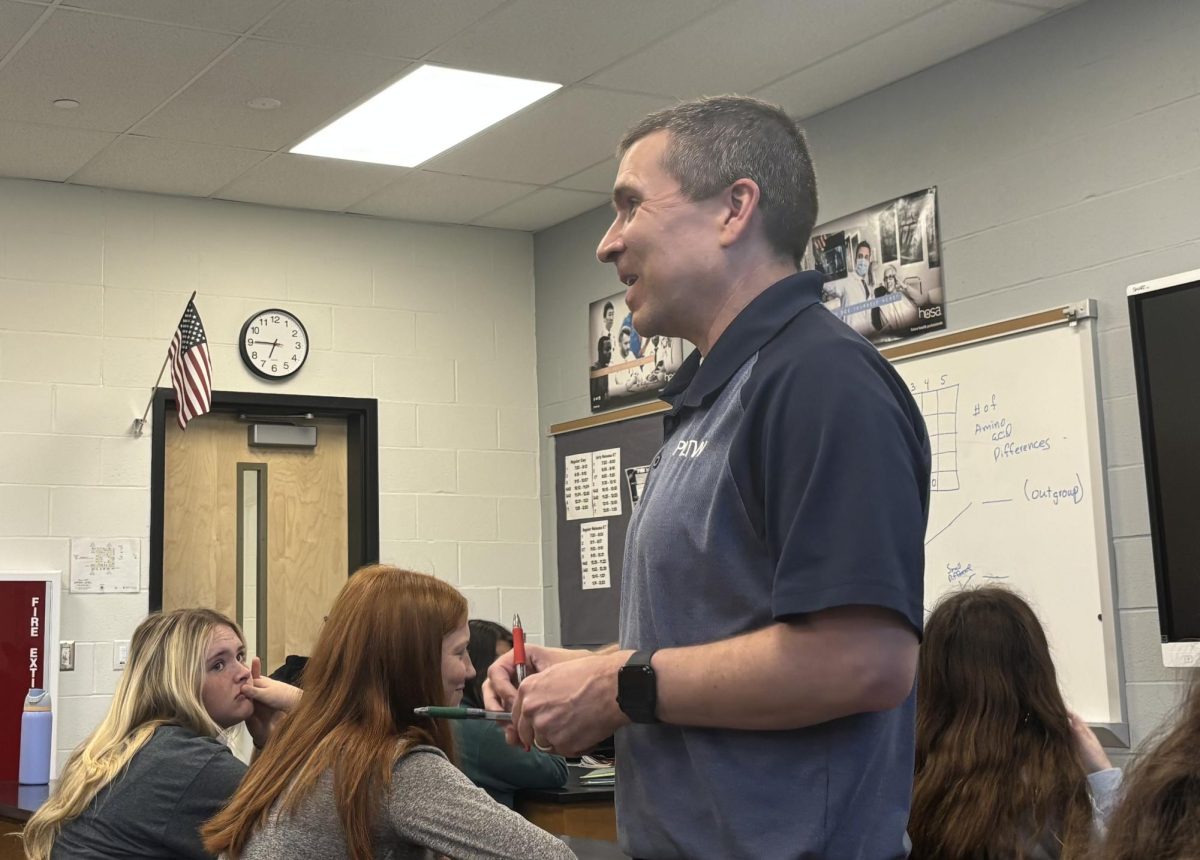
Many teachers note that the military doesn’t directly change their teaching style, but it does alter their mental mindset and how they approach challenges. Science teacher Christopher Dalton, who served in the reserves for over 10 years and deployed three times, emphasizes the importance of setting goals and accomplishing them.
“The military taught us how to meet an objective,” Dalton said. “If you want to achieve something, you must be able to come up with a plan to meet that objective. Being able to plan effectively and track your progress, and if something goes wrong, being able to adapt and adjust.”
While Harris focused on resilience and Dalton emphasized planning, other veterans said the military also taught values that go beyond goals and discipline. For substitute David Barlow, a veteran who served in the military for seven years, one of the most important lessons he carried from his service was integrity.
“Integrity, if you don’t have it, you don’t have a life, because it affects everything you do,” Barlow said. “Every job I have ever had, or every relationship, whether it’s personal or professional, if you have no integrity, those things, they won’t last.”
Harris notes that the military doesn’t just teach skills like integrity or discipline it can also change how people interact with others. Being part of different teams and facing new challenges helps service members understand and respect other people’s perspectives.
“I’ve been exposed to people from all over the country and the world, from so many different backgrounds,” Harris said. “It really made me more sensitive to different perspectives and understand that just because something went a certain way for me, it doesn’t mean it’s the same for everyone else.”